
Emergency grab bag
Emergency grab bag
It’s useful to make a list of essential items that you can grab quickly in an emergency or keep them stored somewhere with easy access in a small enough bag for anyone to carry.
When preparing for a potential emergency, its best to think first about the basics of survival: water, food and warmth.
Items you put in the Grab Bag may change seasonally or be dependent on your needs as a household. It should be checked regularly to ensure perishable items are still in date and all information and insurance is up to date.Visit the advice for pet’s page for separate advice regarding your pets.
What you should consider if you are advised to evacuate
If you are advised to evacuate, it is recommended that you have an Emergency Grab Bag ready to ensure a quick and easy exit.

Copy of your Household Emergency Plan, including a list of useful phone numbers, for example for your doctor and close relatives

House and car keys

Mobile phones & chargers

Wallet, purse, cash, bank cards

Glasses and/or contact lenses

Important personal documents in a waterproof bag (insurance, passports, driving licences)

Medication as well as copies of prescriptions for regular medication

Essential childcare supplies (nappies, food)

Bottled water and some non-perishable emergency foods

Spare money
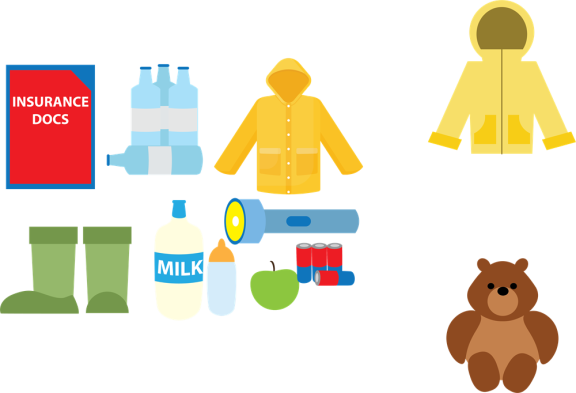
Items to consider if you have time and space

First aid kit

Washing kit

Toiletries and sanitary supplies including wet wipes and rubbish/bin bags for personal hygiene

Other childcare supplies (toys, clothes, blanket, etc)

Sleeping bag or warm blanket for each person – consider additional bedding during winter

Complete change of clothing – consider additional clothing during winter

Notebook and pen

Snack bars

Games and books

Torch and spare batteries (or wind up torch)

Radio and spare batteries (or wind up radio)

Whistle to signal for help

Any other items that might provide some comfort if you have to leave your home in a hurry
If you are advised to stay at home
If you are advised to stay at home, are unable to get out, or suffer a prolonged power cut to your home, it is essential to keep an emergency stock of supplies to see you through, for example:

Water - 3.5 litres of water per person per day for at least three days, for drinking and sanitation

Non-perishable food (at least three days’ supply)

Infant formula (if relevant)

Battery-powered radio and extra batteries (or wind-up radio)

Torch and extra batteries (or wind up torch)

Camping stove

Candles and matches

First aid kit

Feminine hygiene supplies and wet wipes for personal hygiene

Disposable nappies and nappy sacks

Whistle to signal for help

Wrench or pliers to turn off utilities

Cash

Books, games, puzzles or other activities for children.

Sleeping bag or warm blanket for each person; consider additional bedding during winter

Complete change of clothing including a long-sleeved top, trousers and sturdy shoes; consider additional clothing during winter

Important family documents such as copies of insurance policies, passports, National Insurance numbers, NHS numbers and bank account records in a waterproof container
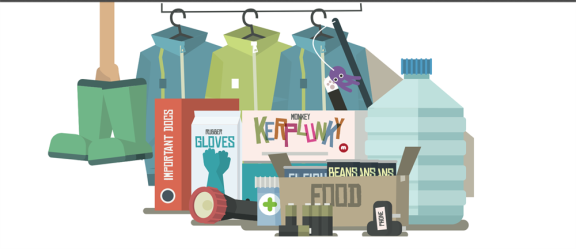
Note: Any items that carry a 'use by' date should be used and replaced on a regular basis.